
Overview of MC-Cube
MC-Cube (Medical Container Cube) is a modular mobile medical facility developed by Sansei Corporation in Japan. It integrates advanced medical equipment and clinical environments within ISO-standard shipping containers, enabling rapid deployment of hospitals or diagnostic units wherever they are needed.
Its mobility, scalability, and disaster-resilient design make it ideal for emergency response, remote healthcare delivery, and temporary medical infrastructure.
In Japan, MC-Cube has been increasingly introduced primarily at university hospitals and has been utilized in various situations, including earthquake disaster response, the COVID-19 pandemic, and large-scale public events. Internationally, MC-Cube has also been deployed or tested in regions such as Africa, the South Pacific, and Central Asia.
For Republic of Uzbekistan

Using a subsidy program provided by the Japanese government, our company conducted demonstration projects in Central Asia and provided training for local medical staff. Based on the success of these initiatives, four MC-Cube units equipped with CT scanners will be introduced in Uzbekistan in 2026.
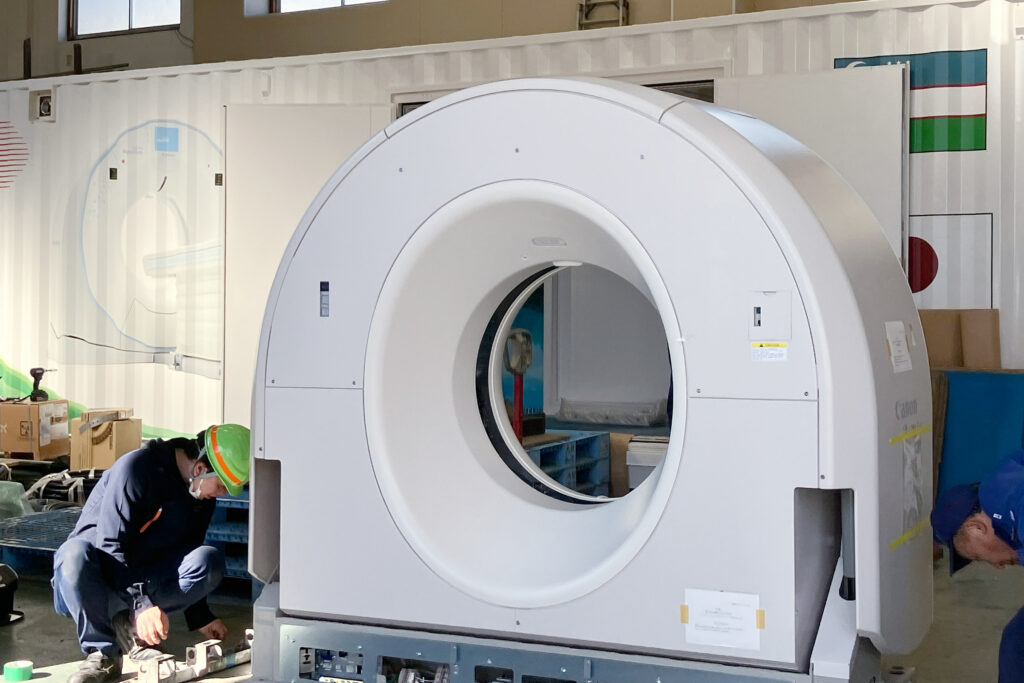
Through Sansei’s advanced technology and meticulous workmanship, we are committed to delivering high-quality medical container solutions.
MC-Cube CT: A Mobile CT Solution for Pandemic and Disaster Response
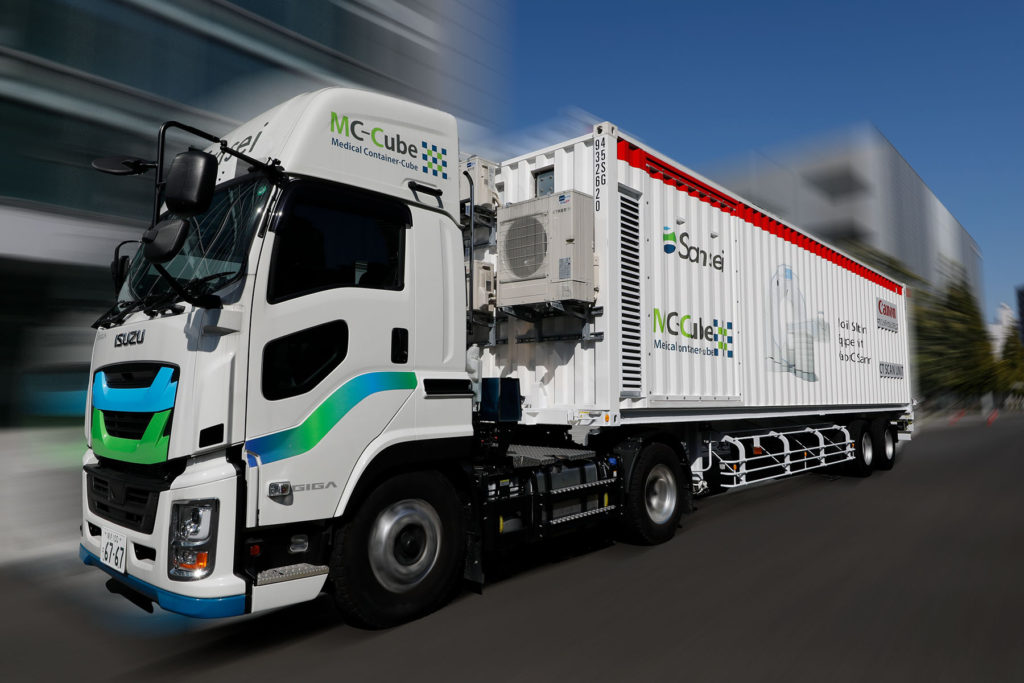
During the COVID-19 pandemic, the medical field faced an urgent need for facilities capable of responding to both infectious diseases and natural disasters in Japan.
In response to these challenges, Canon Medical Systems Corporation and Sansei Corporation jointly developed Japan’s first container-based CT medical unit, integrating both infection control measures and disaster-resilient design.
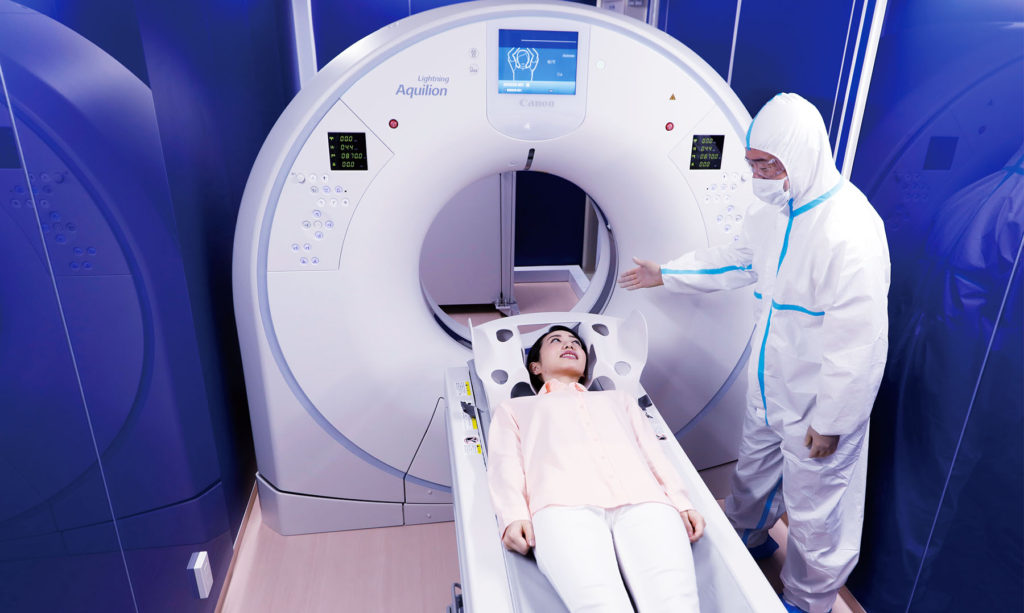
The MC-Cube CT enables the safe installation and transportation of precision medical equipment within a mobile container environment. This allows advanced diagnostic imaging services to be delivered even outside conventional hospital settings.
By bringing high-quality medical infrastructure to disaster-affected areas, rural communities, depopulated regions, and remote islands, MC-Cube CT supports continuous healthcare delivery in locations where medical resources are limited. This innovative solution contributes to strengthening resilient healthcare systems both in Japan and around the world.
SCOMMS (Sansei COVID-19 MC-Cube Mobile Systems)
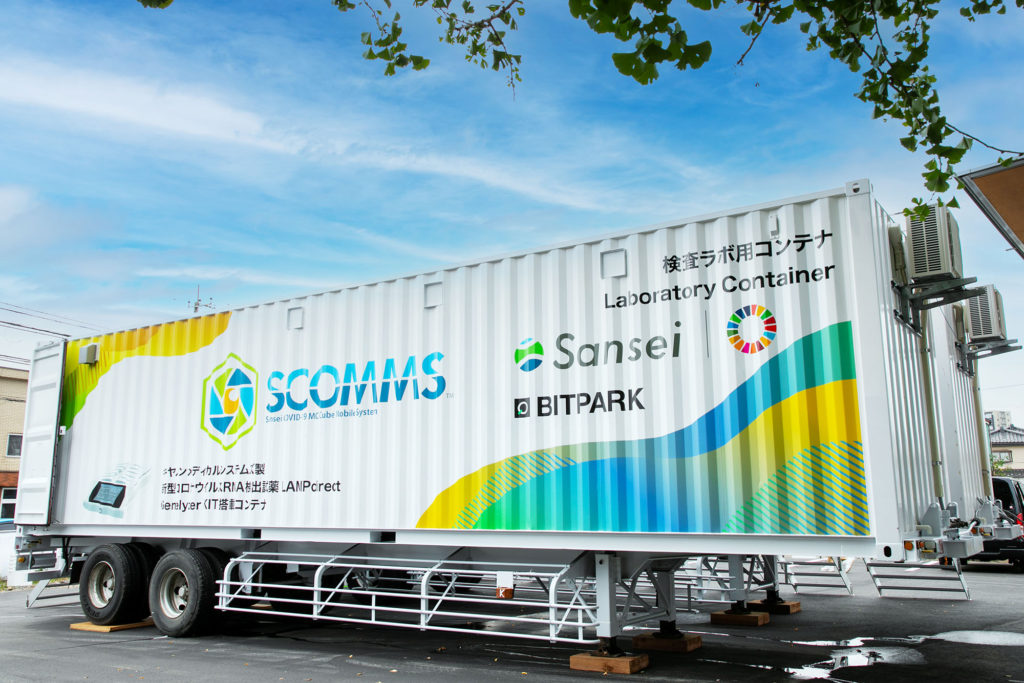
SCOMMS is a mobile virus testing solution developed during the COVID-19 pandemic. Based on the MC-Cube container platform, it enables the rapid deployment of specimen collection and testing facilities.
During the pandemic, SCOMMS played an important role in supporting large-scale COVID-19 testing. One notable example was the Utsunomiya COVID-19 Drive-Through Testing Center in Tochigi Prefecture, where the system was used to provide safe and efficient testing services.
The SCOMMS facility consists of connected container units for specimen collection and laboratory testing, enabling multiple people to be tested simultaneously and delivering results in a short time.
By providing a safe and controlled testing environment, SCOMMS helped expand testing capacity during the pandemic and demonstrated the potential of container-based medical infrastructure for emergency healthcare response.
Domestic Deployment of MC-Cube
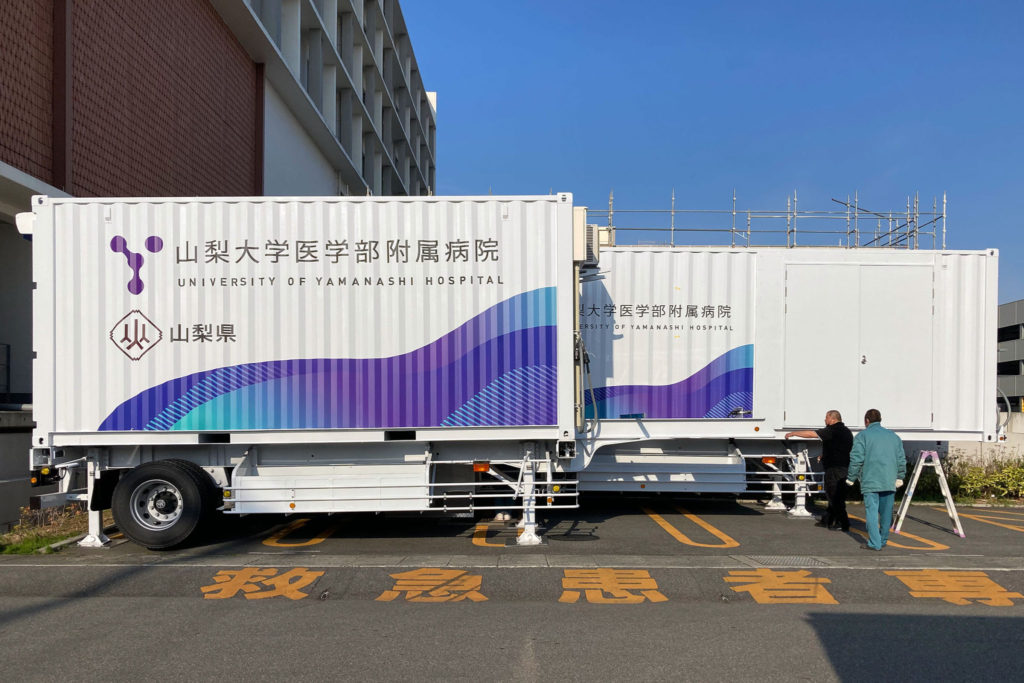
The adoption of MC-Cube in Japan accelerated rapidly during the COVID-19 pandemic.
Its mobility, infection control systems, and flexible deployability were widely recognized as highly effective for responding to emergency medical needs.

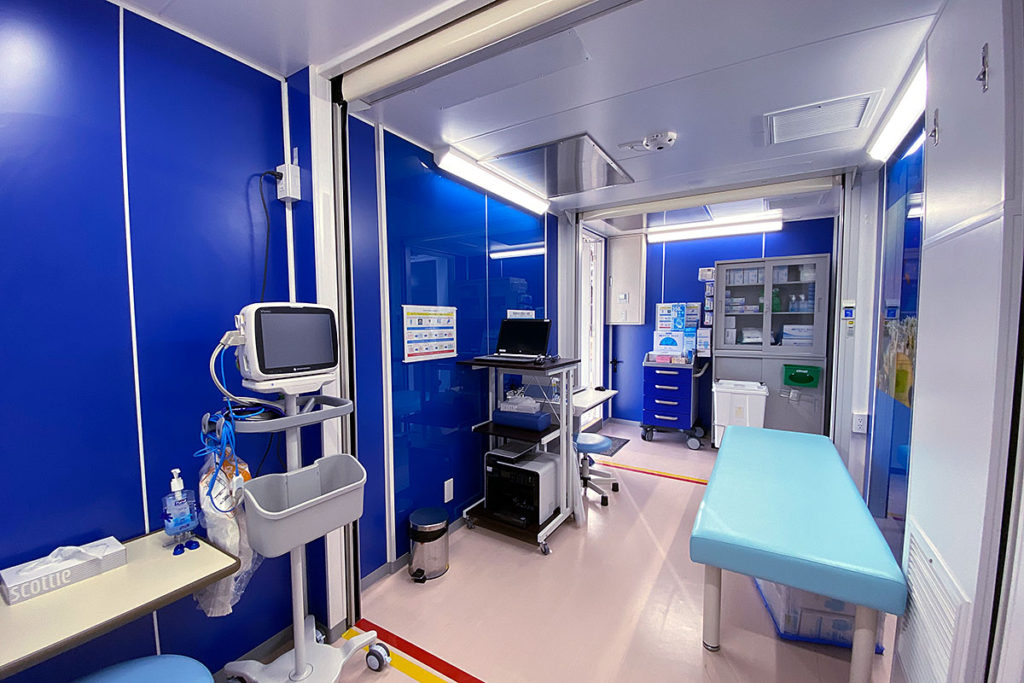
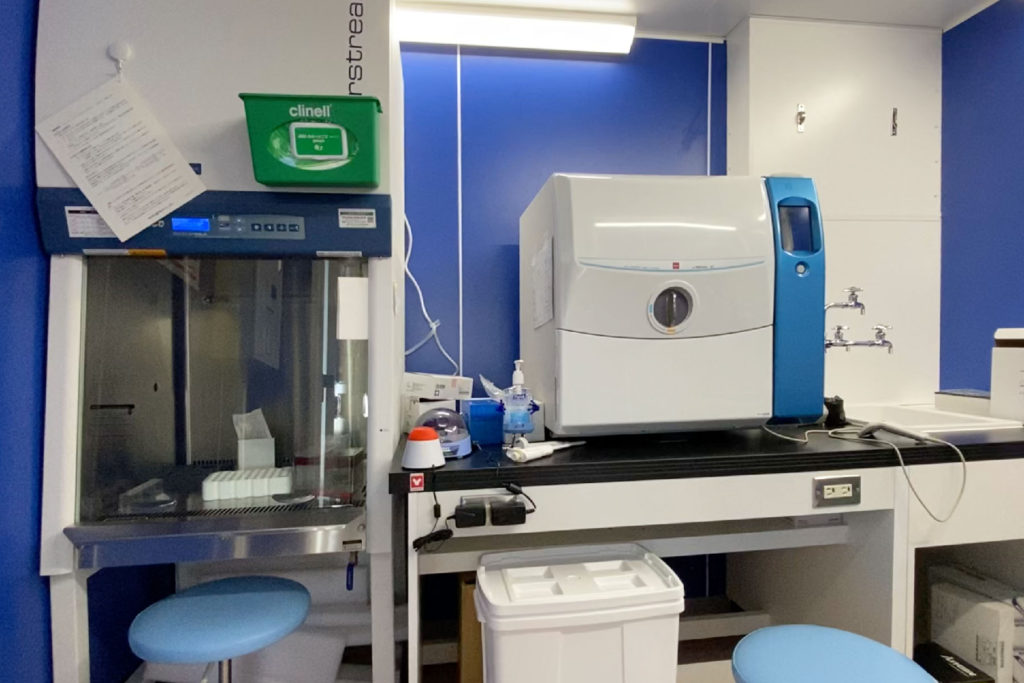
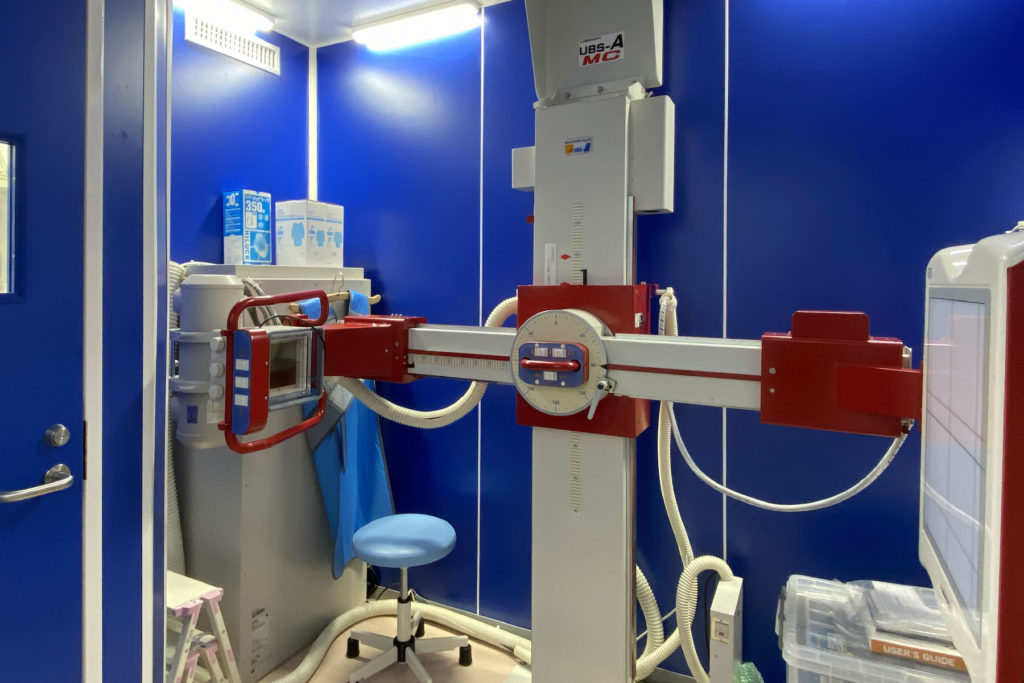
MC-Cube has been introduced to medical institutions across Japan:
- Eastern Chiba Medical Center
- Asahi University Hospital
- National Hospital Organization Tokyo Medical Center
- Sagamihara Kyodo Hospital
- Yamanashi Prefectural Central Hospital
- University of Yamanashi Hospital
and others.
MC-Cube CT Deployment during the Kumamoto Earthquake
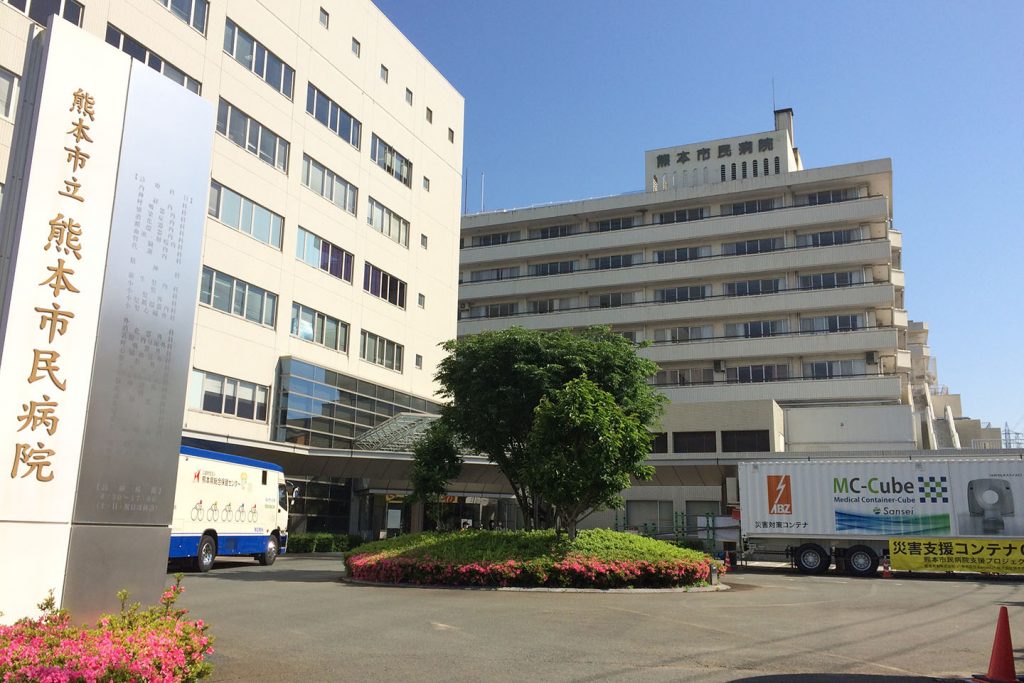
Following the 2016 Kumamoto Earthquake, a medical container equipped with a CT scanner (MC-Cube) manufactured by Sansei was deployed to support medical services at Kumamoto City Hospital. The CT container was provided for approximately two and a half months starting in May 2016, helping maintain diagnostic capabilities in a situation where advanced medical equipment was limited due to earthquake damage.
The magnitude-7 earthquake caused power outages and damage to hospital buildings, making conventional hospital CT systems inoperable. The MC-Cube CT unit operated using its own independent power supply (generator), enabling emergency diagnostic examinations to continue. The container unit can be transported by truck and installed quickly at medical sites. With a setup time of approximately one hour, it contributed to the early restoration of diagnostic services soon after the disaster. Compared with temporary facilities such as tents or prefabricated structures, the container provides superior radiation shielding and a controlled hygienic environment, allowing safe and reliable CT imaging.
Our Vision for Resilient Healthcare
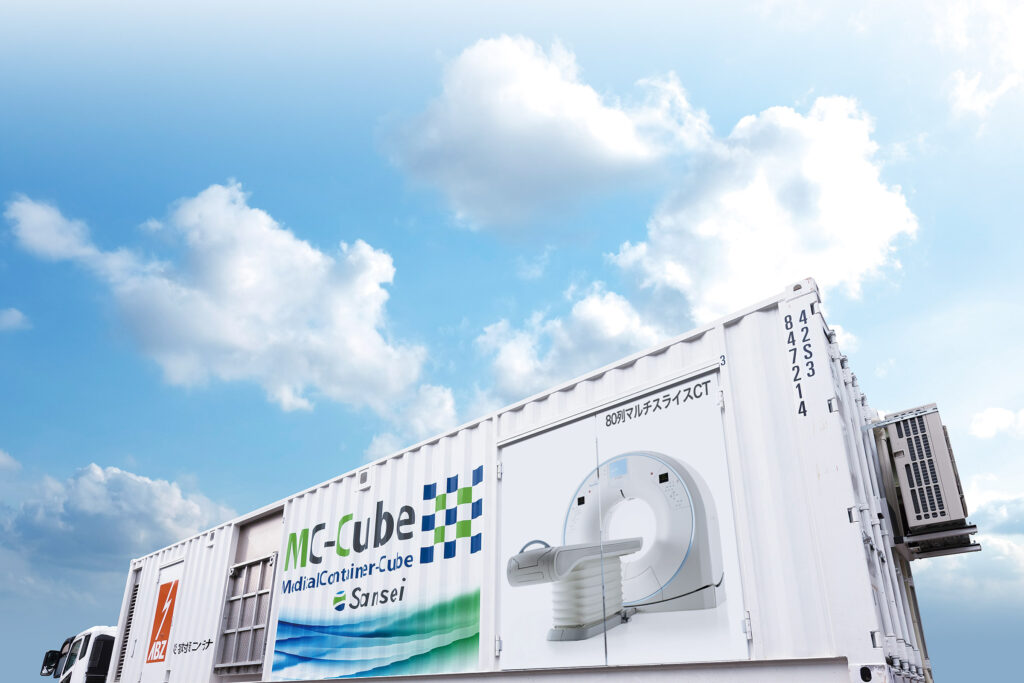
MC-Cube equipped with a CT scanner was originally developed to prepare for the frequent natural disasters that occur in Japan.
Drawing on the technology and expertise we have gained through the construction and maintenance of medical facilities, Sansei sought to create a solution that could deliver advanced medical care precisely when it is needed most—during disasters.
Through subsequent experiences such as the COVID-19 pandemic and the recent earthquake in the Noto Peninsula, MC-Cube has continued to evolve and is increasingly recognized as a valuable medical infrastructure solution worldwide.
We sincerely hope that MC-Cube will contribute to improving access to medical care in regions where healthcare facilities are limited—whether across the vast landscapes of Central Asia, in Japan’s remote islands and mountainous areas, or in other parts of the world facing similar challenges.
Sansei will continue to advance container-based medical solutions and contribute to building resilient healthcare infrastructure around the world.